
Concept car cinematic created in Unreal Engine 5, exploring automotive design, cinematic lighting, camera work, and real-time rendering. Although the project was originally started in 2017, it was put on hold due to time constraints and only recently revisited and completed.

Based on an idea originally developed in 2012 for my earlier project Shift Concept, an electric roadster featuring customizable lighting presets that allowed users to alter the vehicle's visual identity, much like application skins, or create entirely new lighting signatures tailored to their preferences.
Nemesis further expands this idea with non-rotating LED wheel hub displays and a retro-futuristic design language, blending influences from classic hot rods, medieval ironwork, serpent motifs, and Damascus steel patterns, expressed through physical details and digital interfaces.
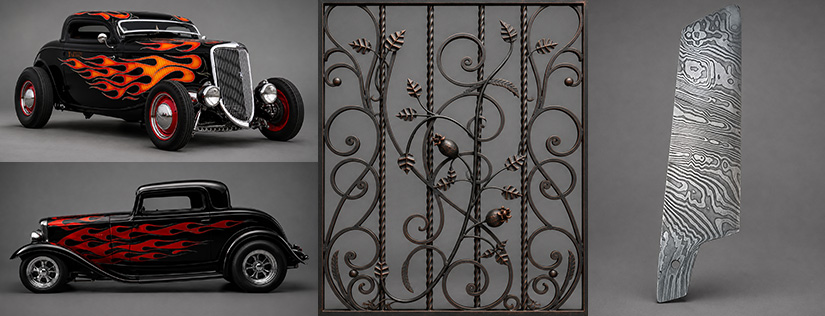
These ideas were reinterpreted and refined into a futuristic electric sports coupe, preserving the original vision while introducing a more mature design language, stronger proportions, and a greater emphasis on user experience.
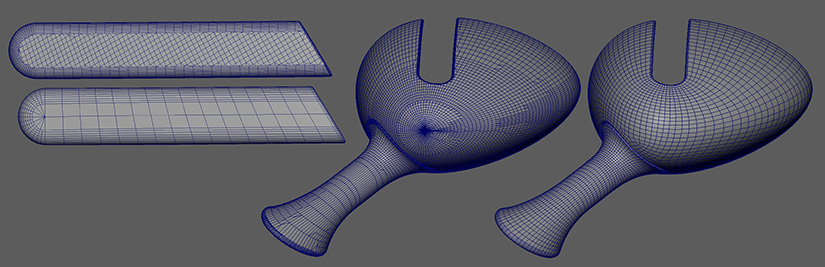
The vehicle was designed directly during the 3D modeling phase rather than through traditional sketching. Although Maya is my preferred modeling software, I chose Autodesk Alias for two key reasons: its curve-based workflow allowed me to explore and refine the design directly in 3D, effectively replacing the need for an extensive sketching phase, while also delivering superior surface quality, curvature control, and continuity.
Retopology was applied only to areas that required continuous UVs, such as the side mirrors and spoilers, where seamless carbon fiber material mapping was necessary.
The garage environment was modeled from scratch in 3ds Max in 2017, before I transitioned to Maya. Assets that were not created by me were purchased from Fab and substantially modified to better fit the project's requirements.
For the car, I created a dust mask in Mari, which was then used as a foundation for the look development process in Unreal Engine. There, I layered detailed dust, grime, spots, and dirt textures to achieve a more realistic surface appearance.
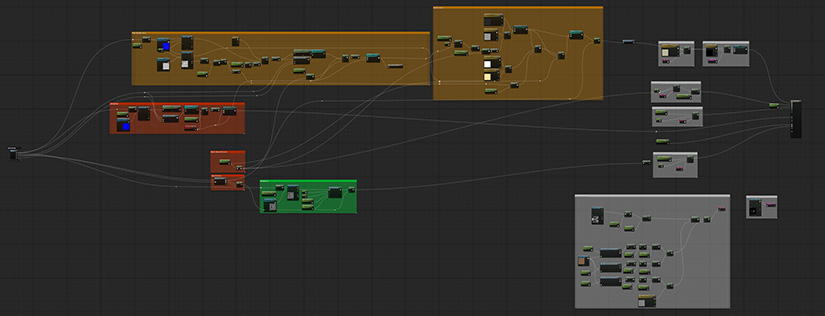
For the garage environment, Substance Painter was used to efficiently create texture variations using smart materials as a starting point. AI-generated textures were also incorporated for specific environment elements, such as the ground, mountains, and cloud formations. For this purpose, I chose to use ComfyUI due to its node-based workflow, which provided greater flexibility and control over the generation process.
I used both Lumen for the environment and Unreal Engine's Path Tracer for the car, garage, volumetrics, and selected render passes. Since Unreal Engine is not primarily designed around traditional VFX workflows, I had to adapt the pipeline to achieve the desired level of control.
The final renders were assembled from multiple passes, including separate renders for the environment, vehicle, refractions, volumetrics, bloom, and lens effects, allowing greater flexibility during compositing and final image refinement. Some of the features supported by Unreal Engine (5.7), such as Holdouts and Cryptomatte, integrated well into the workflow. However, achieving reliable results with velocity passes proved to be more challenging and required additional adjustments to the pipeline.
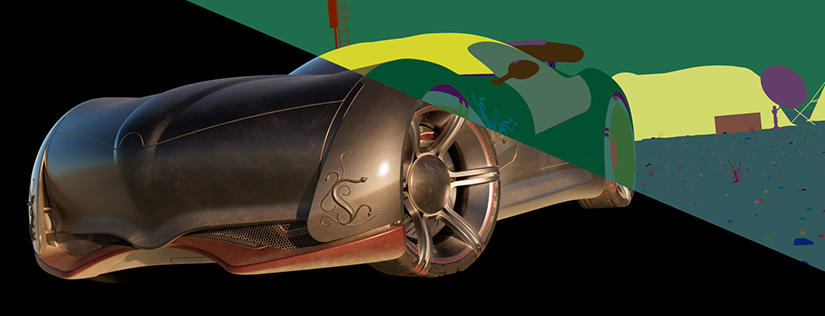
I used Nuke, where I created custom LUTs based on my artistic direction. ACES color management was maintained throughout the pipeline.
The built-in lens flare effects from Unreal Engine did not meet the desired quality level, so I rendered additional passes with improved lens effects in After Effects using Sapphire. Volumetric elements were generated in EmberGen and final video upscaled using Topaz Video AI.
Unreal Engine, Alias, 3dsMax, Mari, Substance Painter, After Effects, Nuke, ComfyUI
All aspects
July 2026